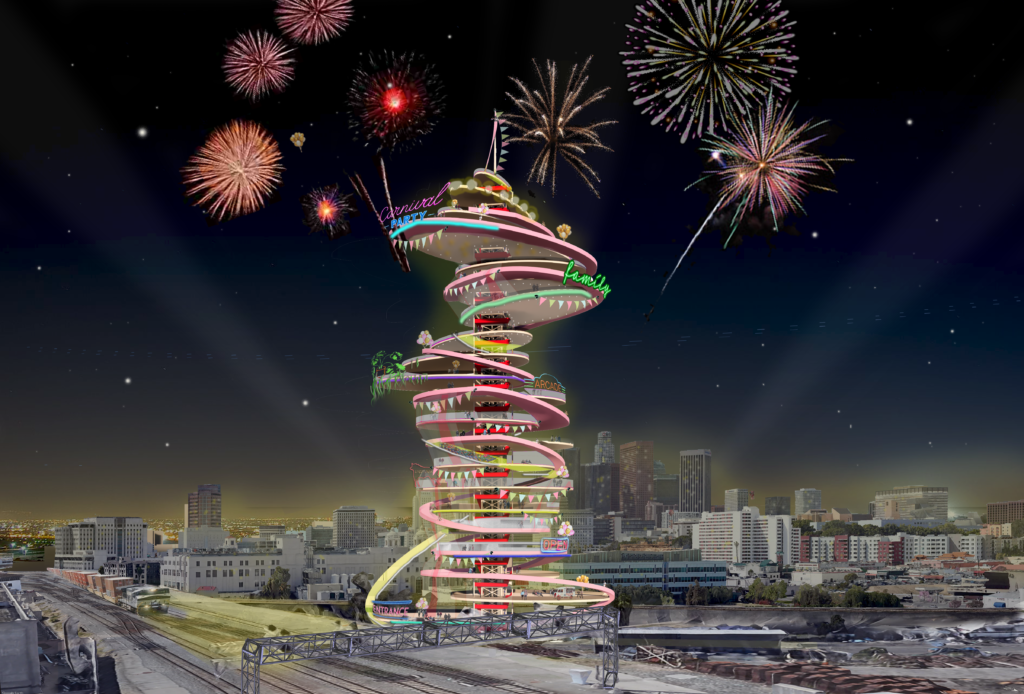
…The f.AIR AMERICANA is a mobile vertical fair, that is transportable via freight with each and every part, across the States…
…The f.AIR AMERICANA enhances the positive qualities of the county fair, and the amusement, but uses the verticality to save from space, energy, as well as making it accessible by locating it in publicly accessible centers and near transportation hubs…
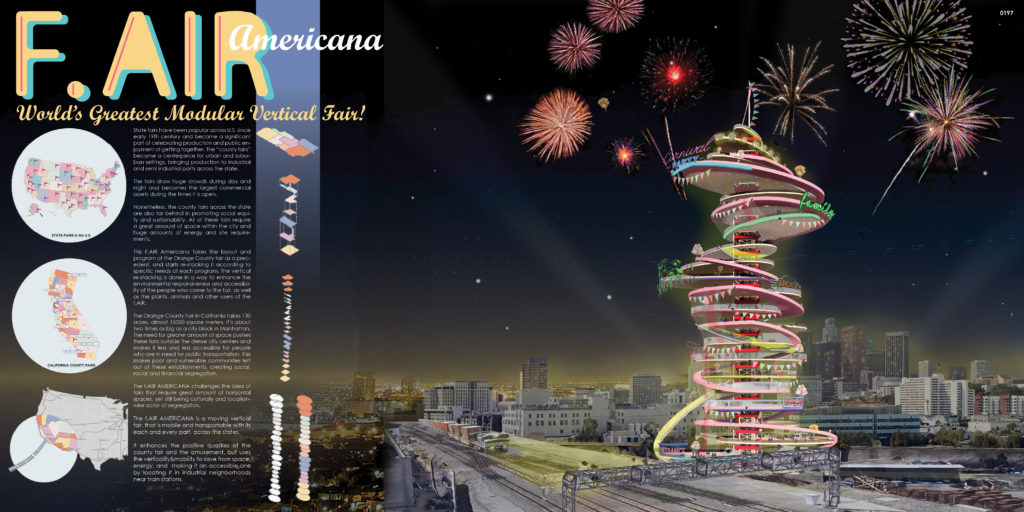
The fair has been a part of the culture of the U.S. since early 19th century and became a significant part of celebrating production as well as public enjoyment and togetherness. The state and county fairs have become a centerpiece for of urban and suburban settings, bringing production to industrial and semi industrial parts across the continent. Plant and farm produces, livestock competitions, exhibits soon became a center of joy for the public eye. The idea of “showcase” and “display” merged with the amusement culture, and the county fairs served as town centers with treats, food, fun games and attractions like ferris wheels, drop towers and roller coasters. The fairs also played a key role in showcasing new technologies and innovations, allowing public to experience it. The fairs draw huge crowds during day and night and become the largest commercial assets during the times it is open.
Nevertheless, the fairs across the state are far behind in promoting social equity and sustainability. The fairs require a great amount of space within the city, with huge amounts of energy with additional site requirements. The Orange County Fair in California takes 130 acres, almost 15000 square meters. It’s about two times bigger than a Manhattan city block. The need for greater amount of space pushes these fairs outside the dense city centers. This makes it less and less accessible for people who are in need of public transportation. This makes poor and vulnerable communities left out, creating social, racial and financial segregation.
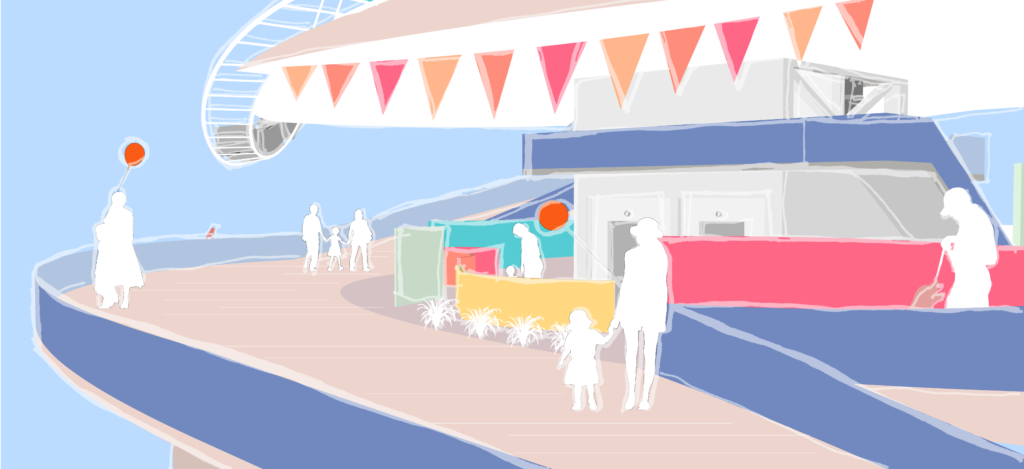
The f.AIR AMERICANA challenges the idea of fairs that require great amount of horizontal space and being culturally and location-wise actor of segregation.
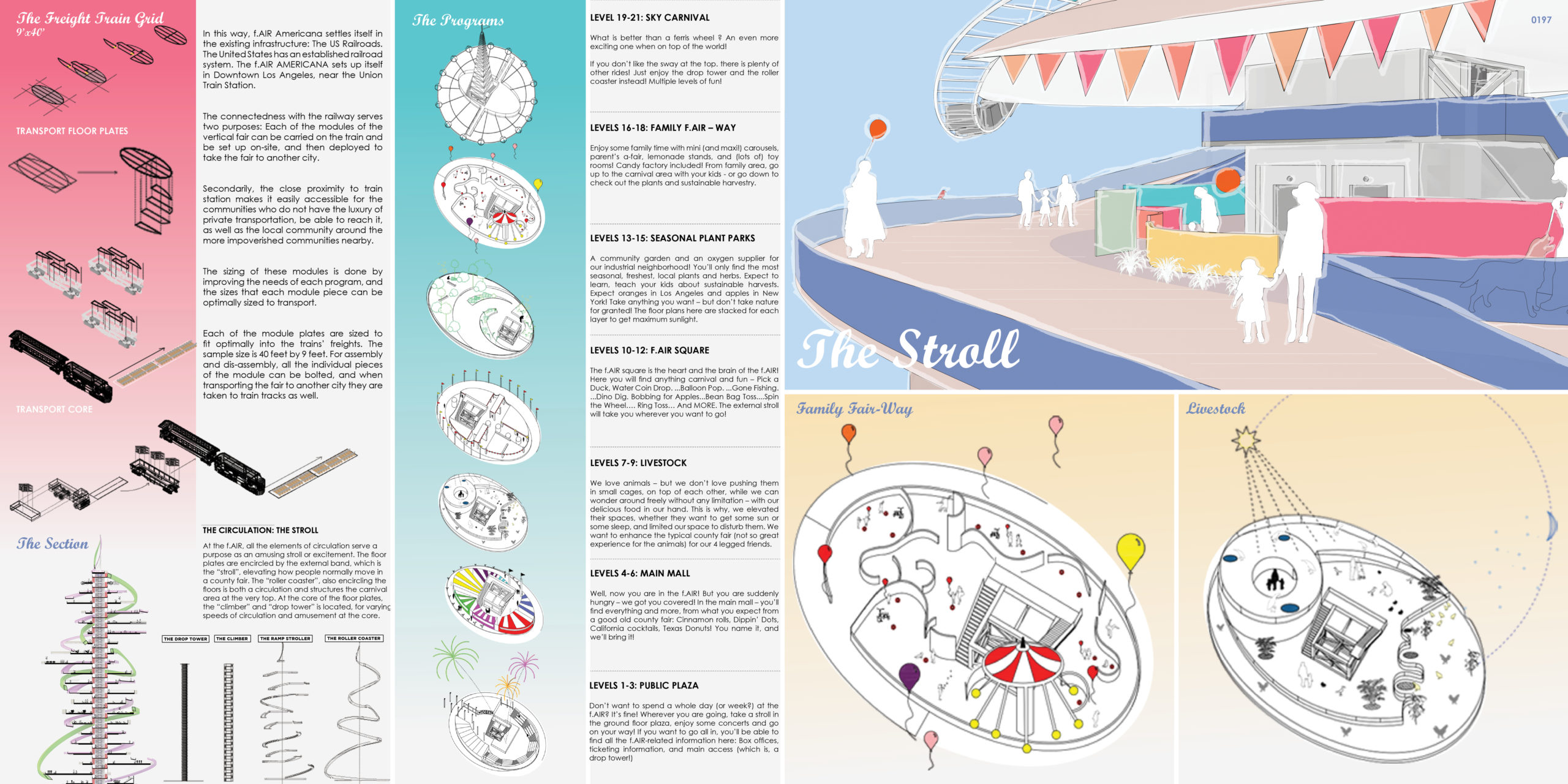
The f.AIR AMERICANA settles itself in the existing infrastructure: The US Railroads. The United States has a history of established railroad system. The f.AIR AMERICANA sets up itself in Downtown Los Angeles, near the Union Train Station. The connection with the railway serves two purposes: Each of the modules of the vertical fair can be carried on the train and be set up on-site, and then deployed to take the fair to another city. Secondarily, the proximity to train station makes it easily accessible for the communities who do not necessarily have the luxury of private transportation be able to reach it, with poor local community in more impoverished sites nearby.
This f.AIR takes the layout of the Orange County fair as a precedent and starts re-stacking it according to specific needs of each fair program. The vertical re-stacking is done in a way to enhance the environmental responsiveness and accessibility of the people, as well as the plants, animals and other users of the f.AIR.
The sizing of these modules is done by improving the needs of each program, and pieces of the each module is also optimally sized for transport via train freights. The sample size is 40 feet by 9 feet. For assembly and dis-assembly, all the individual pieces of the module can be bolted, and when transporting the fair to another city they are taken to train tracks as well.
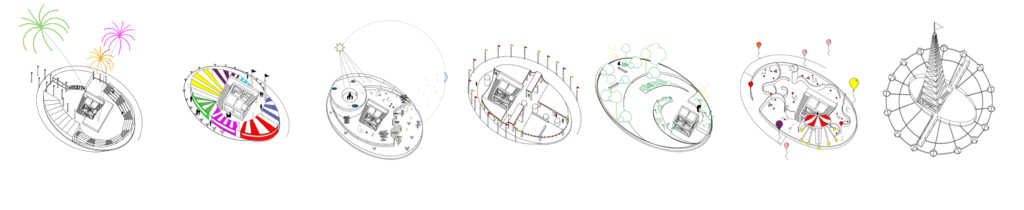
f.AIR Americana shows that a future innovative modular high rise that can embrace the fun, amusement and joy for the people and also nurture environmental and social equity.
2019-2020
You must be logged in to post a comment.