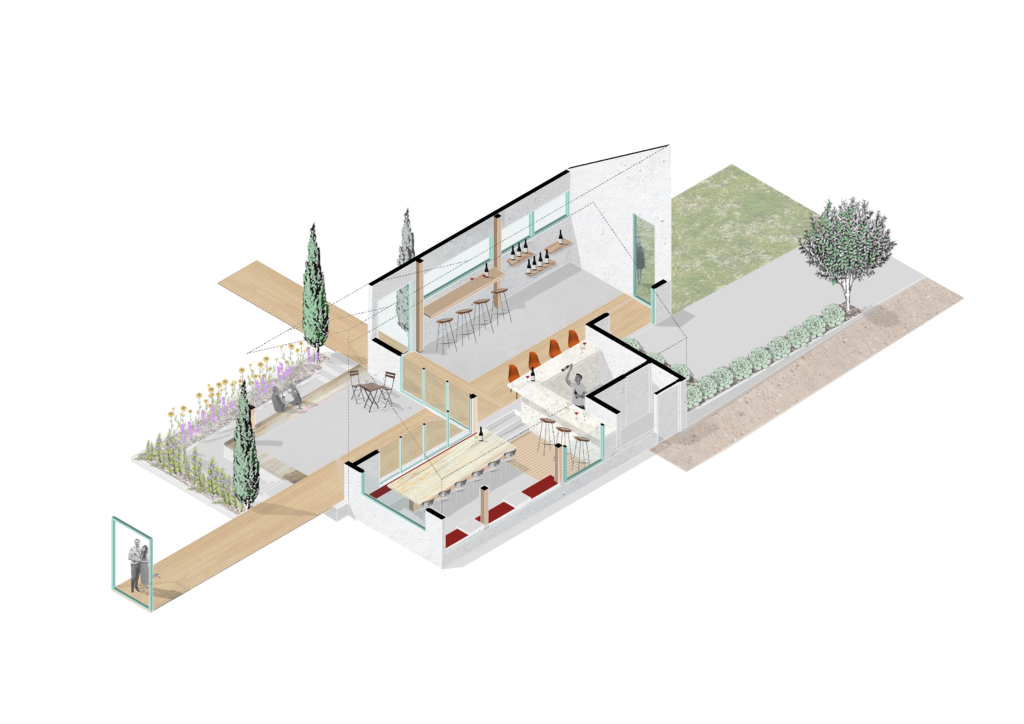
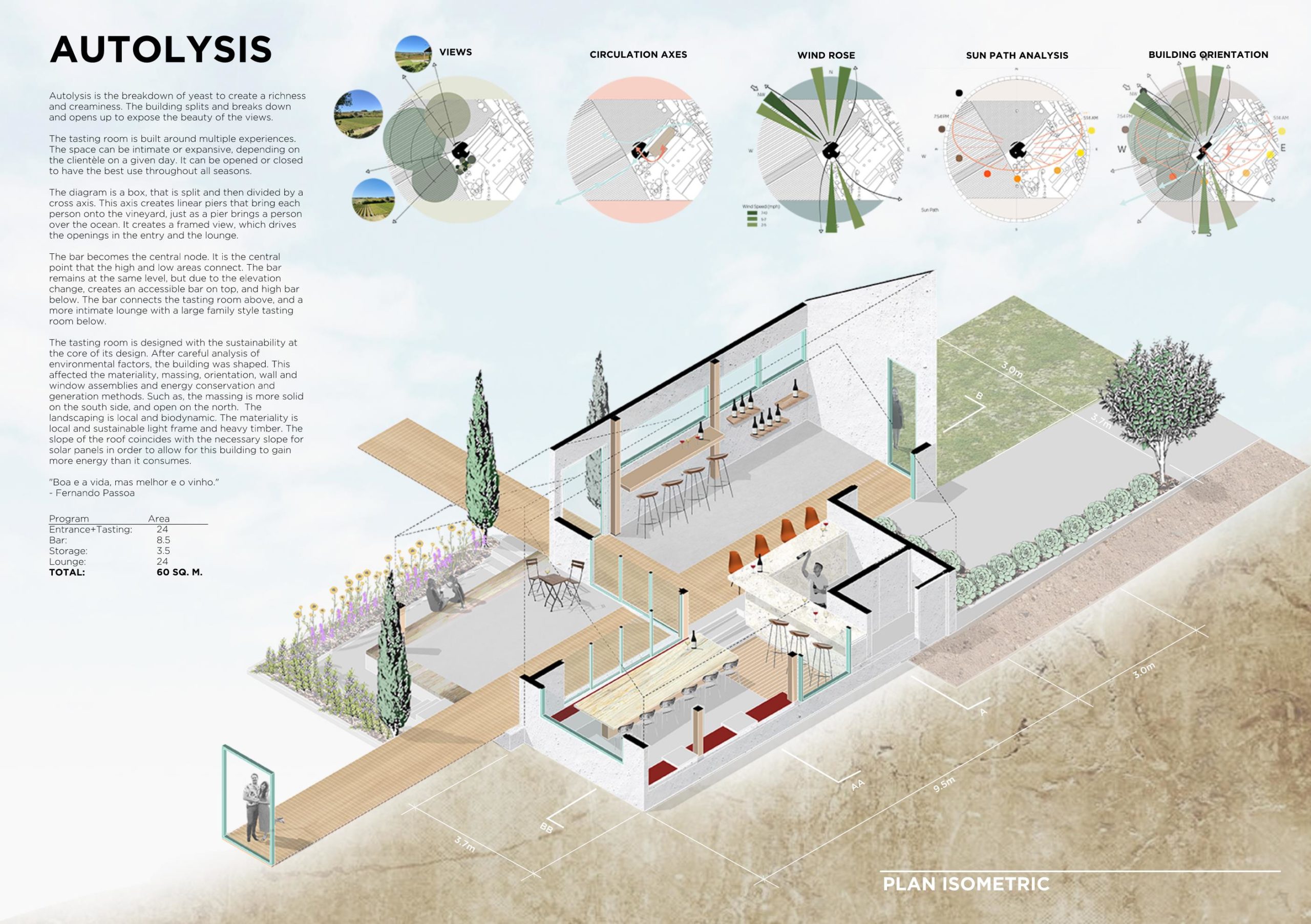
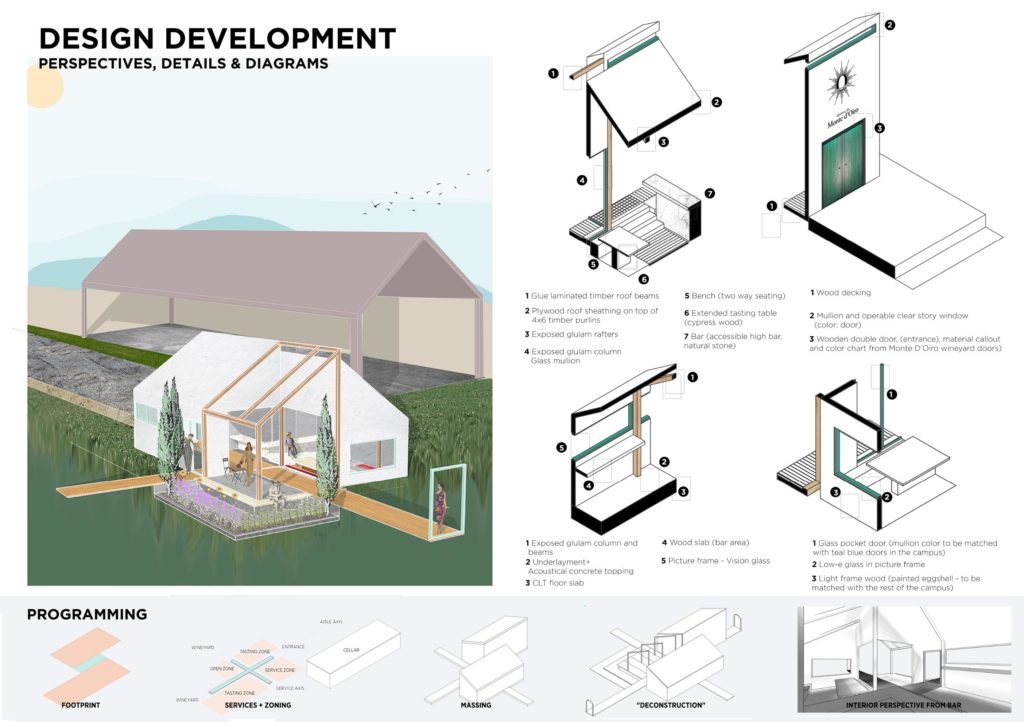
Autolysis is the breakdown of yeast to create a richness and creaminess. The building splits and breaks down and opens up to expose the beauty of the views.
The tasting room is built around multiple experiences. The space can be intimate or expansive, depending on the clientèle on a given day. It can be opened or closed to have the best use throughout all seasons.
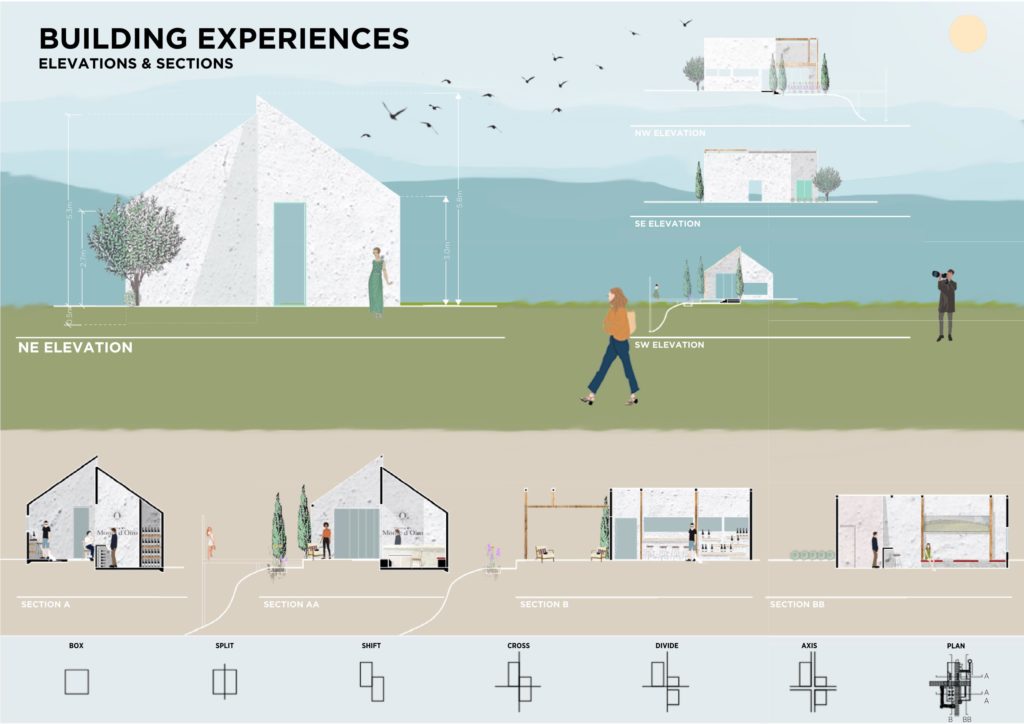
The diagram is a box, that is split and then divided by a cross axis. This axis creates linear piers that bring each person onto the vineyard, just as a pier brings a person over the ocean. It creates a framed view, which drives the openings in the entry and the lounge.
The bar becomes the central node. It is the central point that the high and low areas connect. The bar remains at the same level, but due to the elevation change, creates an accessible bar on top, and high bar below. The bar connects the tasting room above, and a more intimate lounge with a large family style tasting room below.
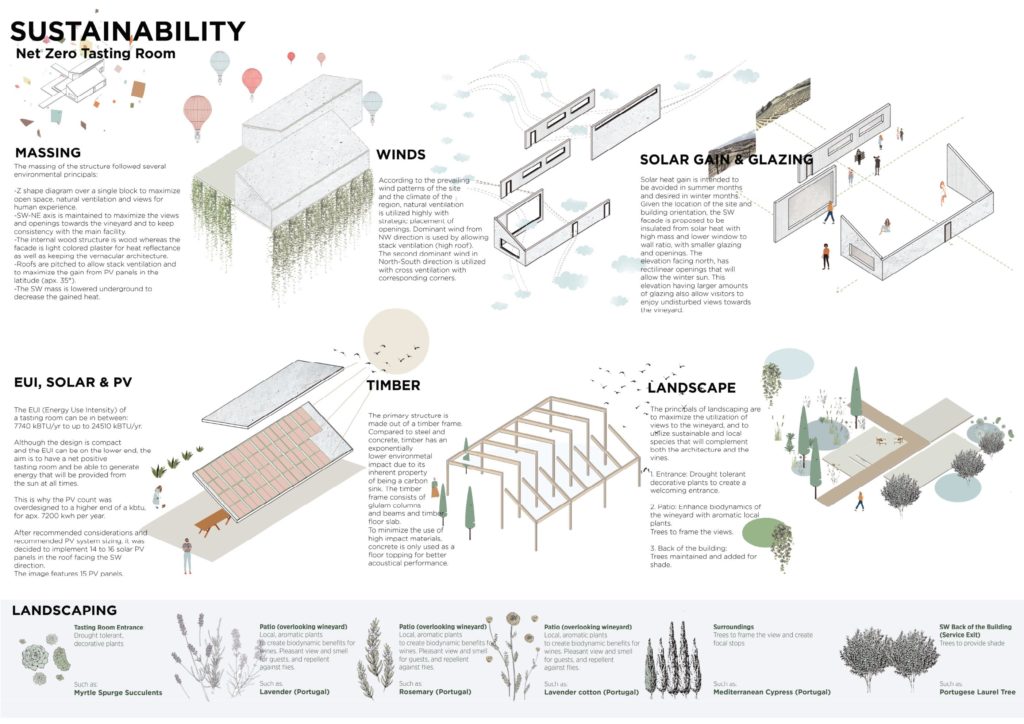
The tasting room is designed with the sustainability at the core of its design. After careful analysis of environmental factors, the building was shaped. This affected the materiality, massing, orientation, wall and window assemblies and energy conservation and generation methods. Such as, the massing is more solid on the south side, and open on the north. The landscaping is local and biodynamic. The materiality is local and sustainable light frame and heavy timber. The slope of the roof coincides with the necessary slope for solar panels in order to allow for this building to gain more energy than it consumes.
“Boa e a vida, mas melhor e o vinho.”
– Fernando Passoa
You must be logged in to post a comment.