What is the skyscraper of the future? Will the megastructure inform the city, or are there cues within the city that can begin to inform the skyscraper itself? If Frank Lloyd Wright’s Guggenheim has taught us anything, it is the extension of the street that can be the new skyscraper. The car informed the design of the city. The city has had to evolve to deal with the discrepancy of the speeds between the speed of the pedestrian and the speed of the car and the spaced both inhabit. The car needs to be parked. Code requires parking based on the type of building you produce. But what happens if the load for parking becomes decreased? What does the city look like or feel like with less cars, or automated cars, or some other transportation system? Can new design and new technology drive away these code requirements? When this inevitably happens and parking your own car becomes obsolete, there will be mass parking structures that will become relics.
The greatest disturbance to the environment comes in the construction phase. The amount of damage done to create something new, is difficult to repay with additional environmental savings, like solar harvesting. So, the question lies, can we use the existing infrastructure to morph the new city. Can we retrofit existing structures and create something useful? The answer should be yes. Sustainability should be longevity.
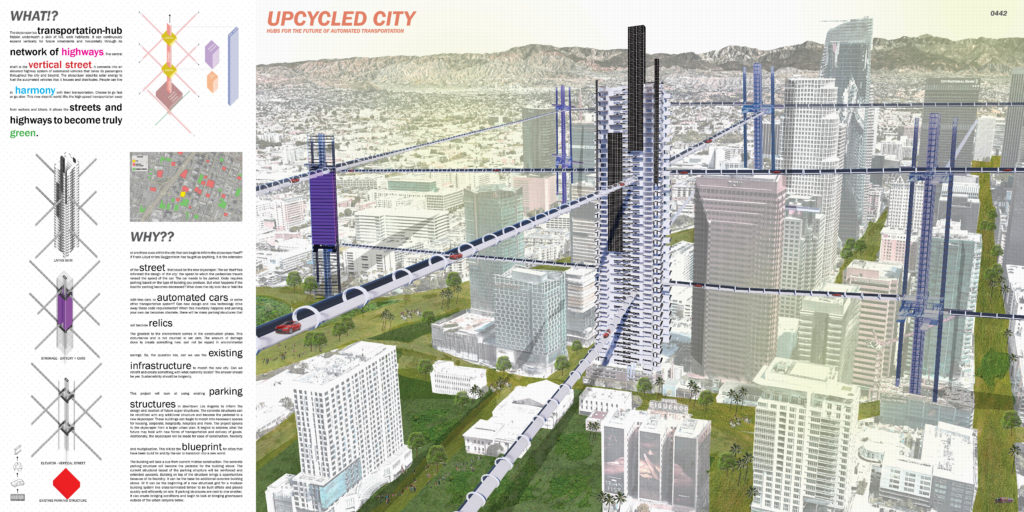
This project looks at using existing parking structures in downtown Los Angeles to inform the design and location of future super structures. The concrete structures can be retrofitted with any additional structure and become the pedestal to a new skyscraper. These buildings can begin to morph into spaces for housing, corporate offices, hospitality, hospitals and more.
The project speaks to the skyscraper from a larger urban plan. It begins to address what the future may hold with new forms of transportation and delivery of goods. Additionally, the skyscraper will be made to be efficiently constructed, flexible and the ability to be multiplied. This idea can be the blueprint for cities, built for the car, to transition into a new world.
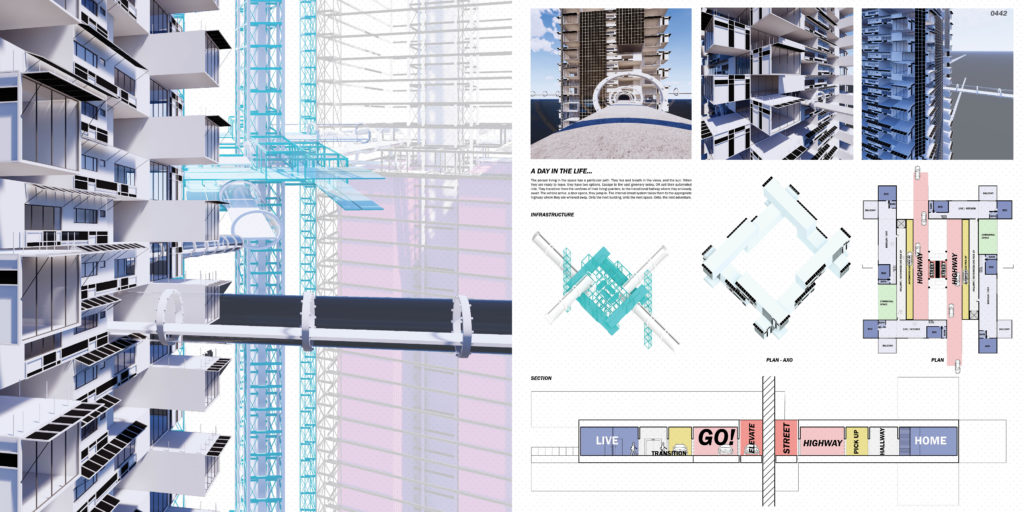
The building emulates mid/high-rise construction, where the existing concrete parking structure will become the podium for the building above. The current structural layout of the parking structure will be reinforced and extended upwards. Building on top of the structure brings an opportunity for a multitude of programmatic and structural options. It can be the base for additional concrete building above. Or it can be the beginning of a new structural grid for a modular building system like cross-laminated timber to be built offsite and placed quickly and efficiently on site. If parking structures are next to one another, it can create bridging conditions for elevated green-space above the urban canyons below.
The proposed skyscraper is a transportation hub hidden underneath a skin of live+work habitants. It can continuously expand vertically for future inhabitants and expand horizontally through its network of elevated highways. The central shaft is the vertical street. It connects to an elevated highway system of automated vehicles that takes its passengers throughout the city and beyond. The skyscraper absorbs solar energy to fuel the automated vehicles that it houses. People can live in harmony with their transportation. The users can choose to go fast with the elevated automated vehicular transportation system or go slow in the newly formed elevated living planes. This new electric world lifts the high-speed transportation away from walkers and bikers on the ground level. It allows the streets and highways to become truly green.
You must be logged in to post a comment.