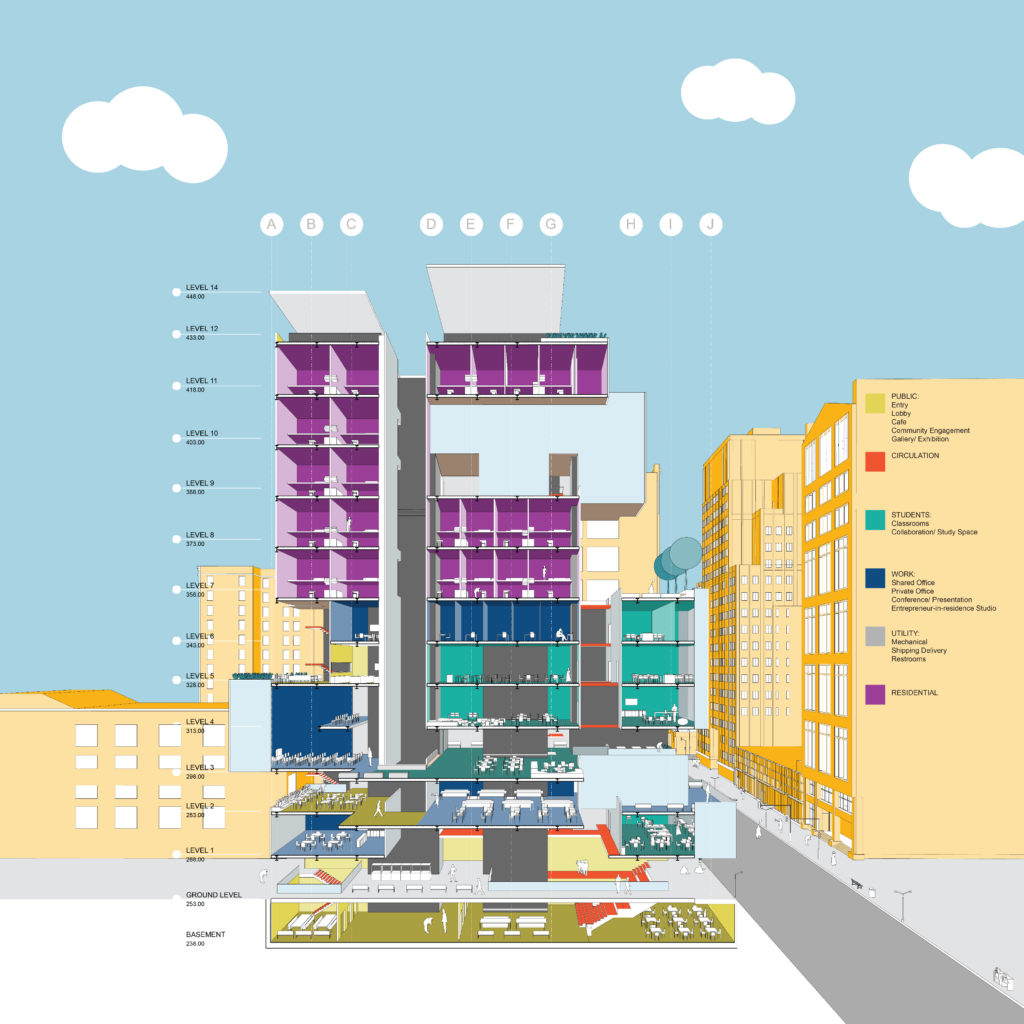
A proposal for the USC Marshall satellite campus for entrepreneurship studies.
Success as an entrepreneur is formed by the ability to collaborate with peers and investors. Collaboration can be achieved through connection of physical spaces to enhance chance for interaction. The proposal is a mixed program of office space and academic space. Interaction of students, in a business school, with professionals helps to grow and foster relationships. These relationships can benefit both the student and professional. The school can be an incubator of thought and experimentation. The offices can create opportunities to students who can gain valuable experience through professional interaction and real world study.
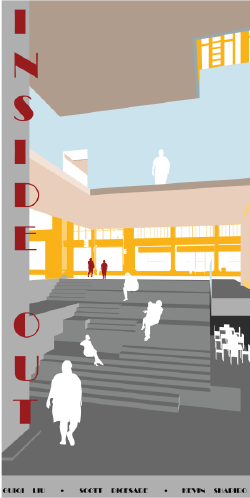
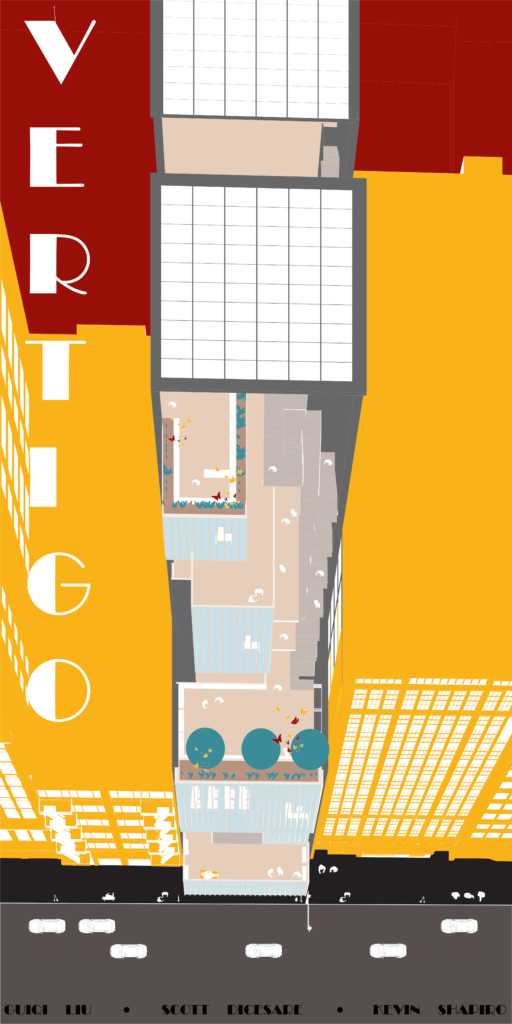
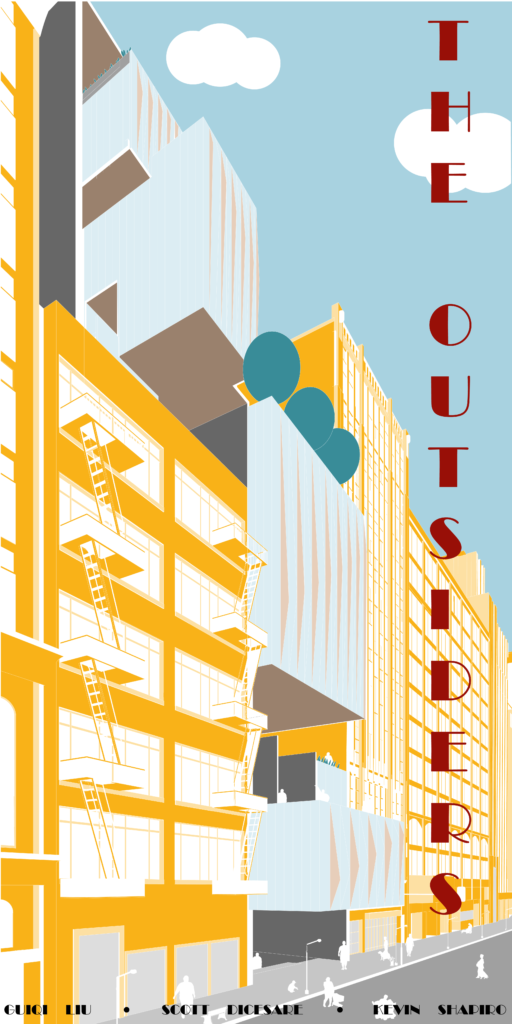
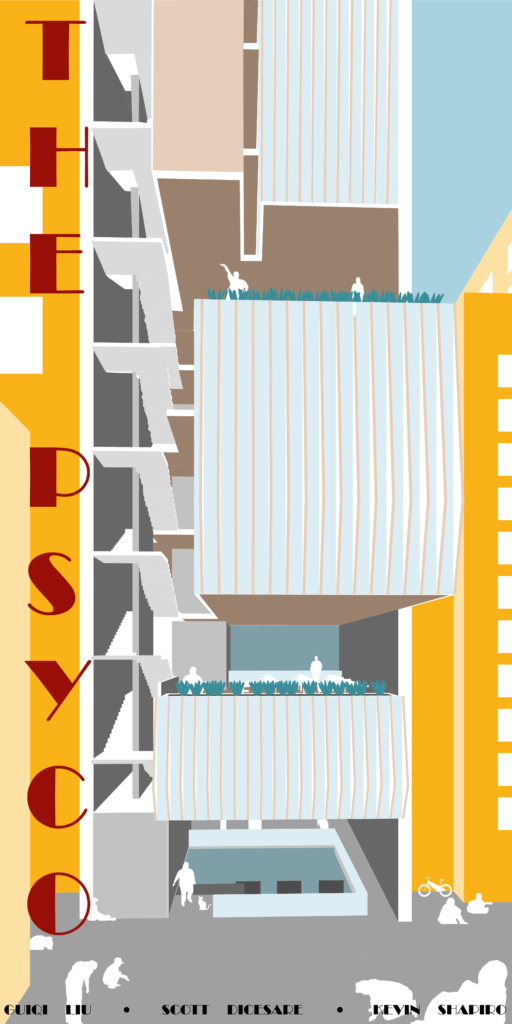
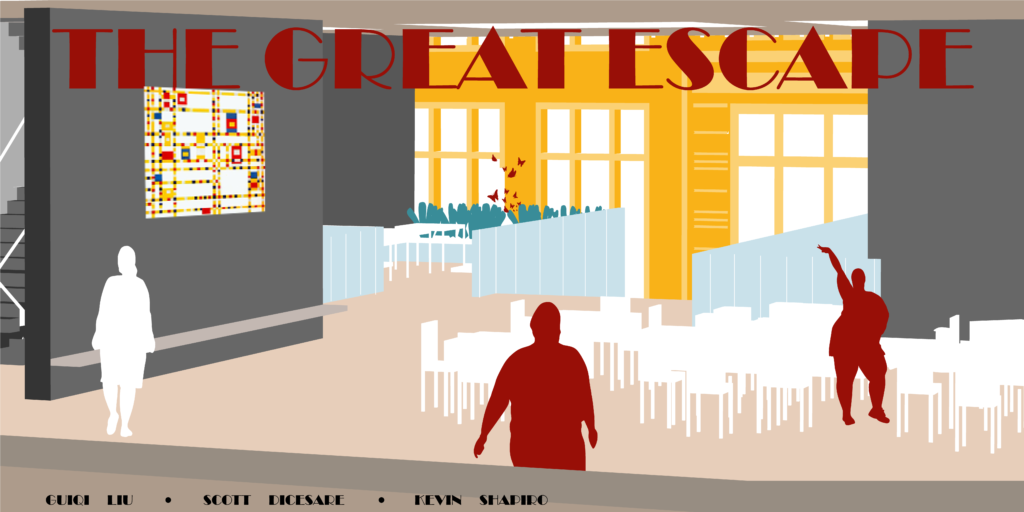
The site is a narrow lot which encloses an urban canyon on Broadway. The site does not get much direct sunlight do to its surrounding context and orientation. The building is split to create levels of program and space. People can pass through the main street level and create a vibrant space that promotes movement, light and interaction. The rear of the building is fully designed to embrace connection to the alley behind and in anticipation of visual and physical connection to the opposing block and alley. A main concern is that the lot continues to be used as a pass through. The building strives to be a connection to other parts of the Broadway district. It is said in real estate, the furthest anyone will walk to a destination is ¼ mile. This building can foster walking by being porous enough for allow city dwellers to move freely through the street level. Additionally, this will increase the chance for happenstance interaction between public, professional and scholastic users.
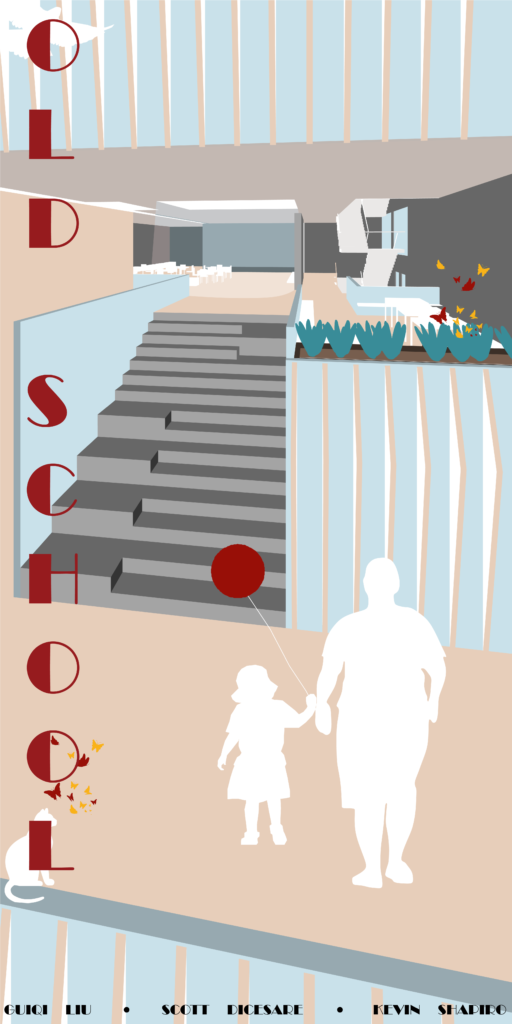
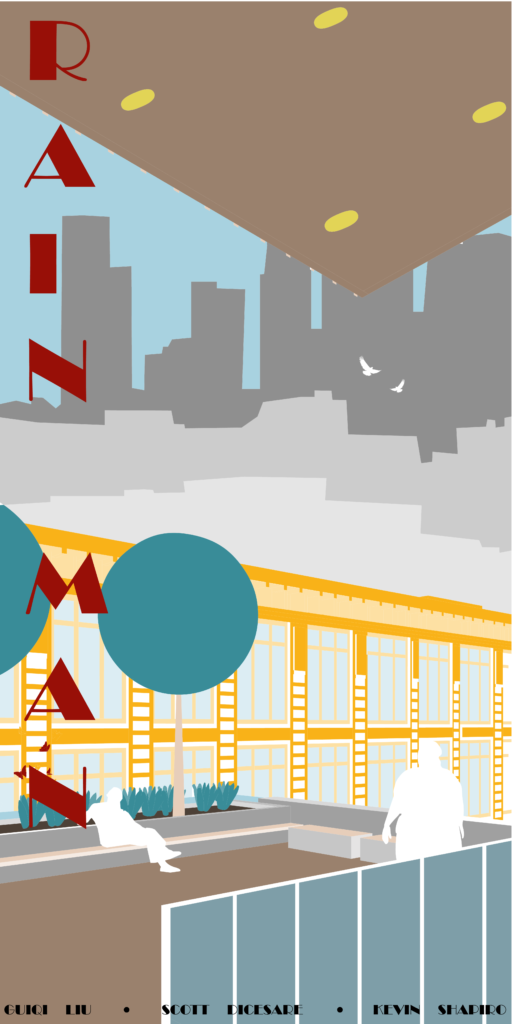
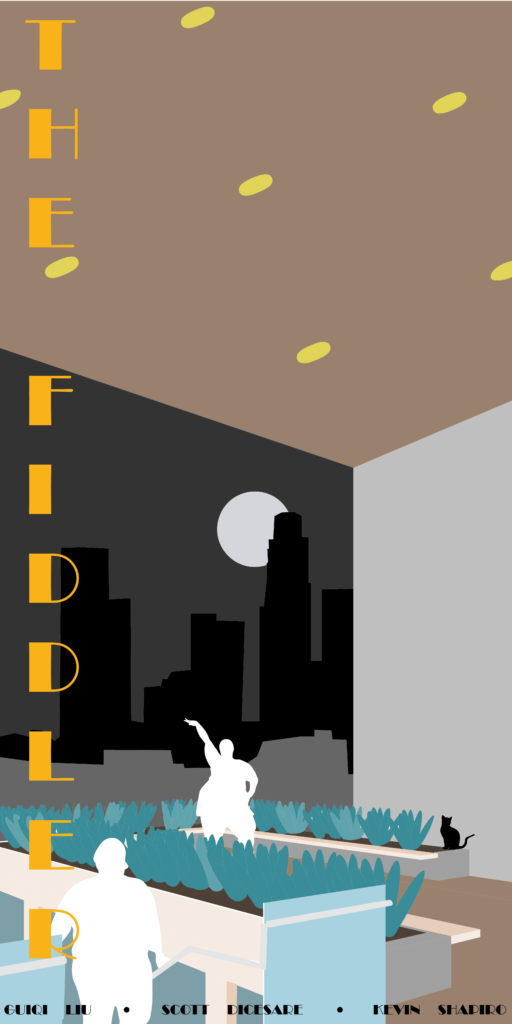
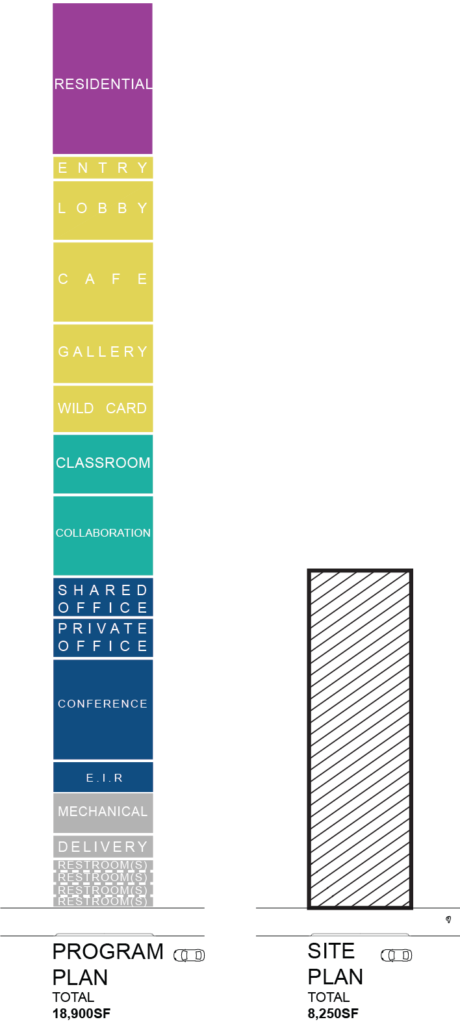
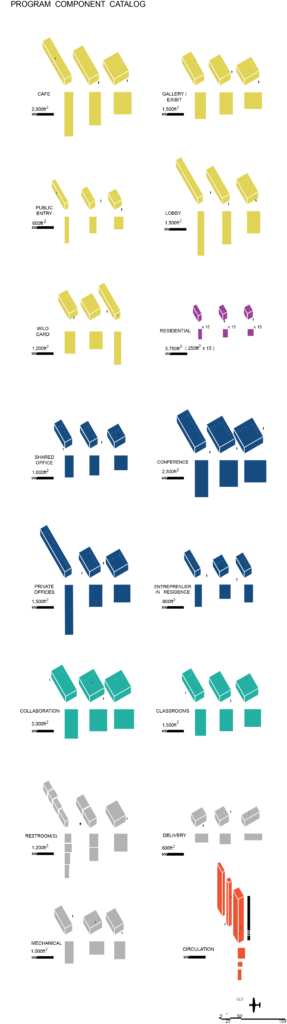
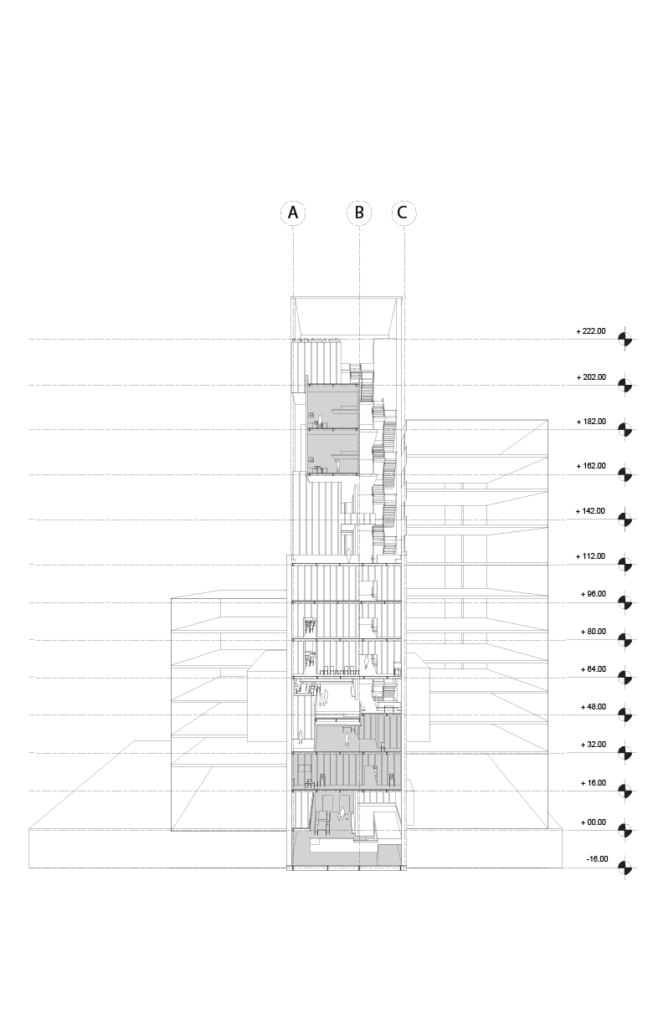
The ground level promotes public circulation. The levels above promote natural ventilation and connection with the outdoors. The office would primarily be located in the center of the building focusing on its connection with the school. Work space is both private and shared offices. The school takes up the other half of the central location in the building. This includes open collaboration space, classroom and allocated private space for more focused study. The residential space is segregated from the rest of the program and stacked above for increased views. The residential space begin above the height of the adjacent building allowing all units to have a downtown view and create a more premium place to live.
Structurally the building is a hybrid. The large shear walls are made of concrete and steel gravity system. Exposed wood using CLT for some floor plates, glulam for some of the gravity system, as well as treated wood cladding add natural products to a stark steel and concrete downtown. Circulation is placed on one side of the building. There are two main stairs as well as two main elevators. One elevator has restricted access for the school / office and the other is primarily for the residential levels.
Mechanically each room will be zoned based on use. The project utilizes chill beam, ground source cooling and solar panels as supplementary units to the system as a whole in an attempt to be a more sustainable high-rise.
Team: Scott DiCesare, Kevin Shapiro, Guiqi Liu
2017

You must be logged in to post a comment.